Sheet TG-07-C / ROUTE
Paper Itinerary on the Tor Guide Desk
A reading order. Not a reservation book.
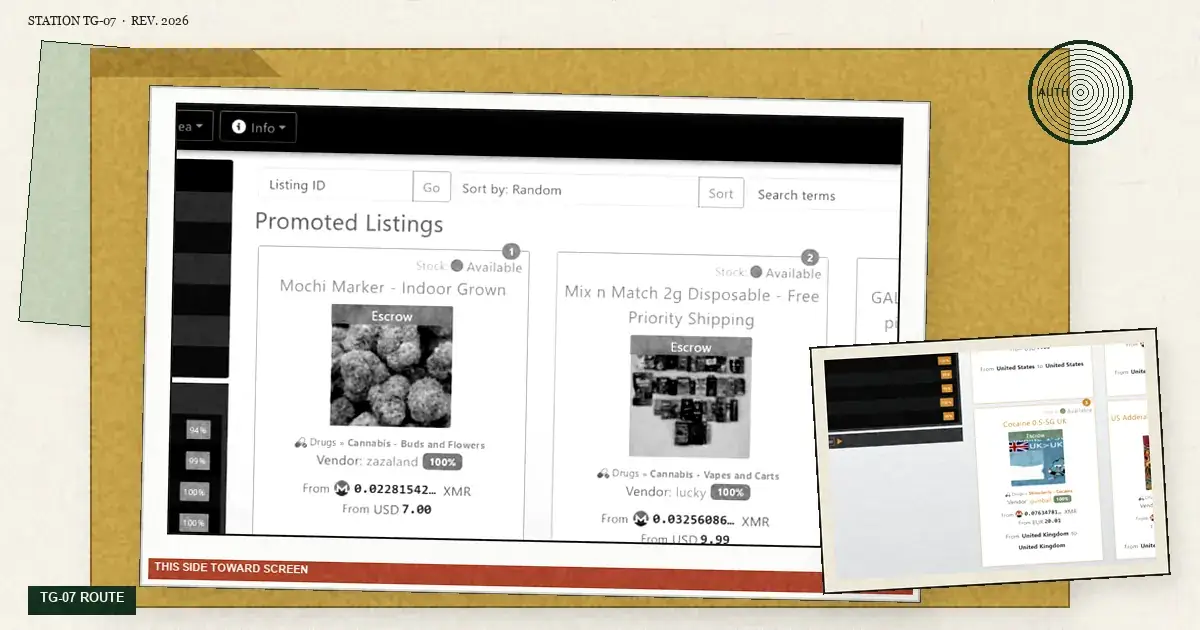
Most people who land on a tor guide want the shortest path to a paste. The shortest path is also how lookalike pages win: a tired reader glances at a prefix and donates the middle of the string to whoever generated a near-match. This sheet delays that path on purpose. Kit first, then the habitat edge, then one plot card — not seven, and not a cart.
Think of the folder as a valley map only if the metaphor helps you slow down. The plots are named ridges. The border card is the pass where ordinary browsers fail onion lookups. The ledger is a note about words that appear in reporting, not a ticket office.
Ten minutes: packing and voucher hygiene. An hour: districts and a single habitat card. Collecting every cited string as a souvenir is how notes leak and how substitutions travel.
I. How this tor field guide orders a walking day
This tor field guide puts packing before plots because a random Tor installer cannot be repaired by a pretty plot card. Provenance of the client is the difference between a signed binary from the Tor Project and a trap with a similar logo. Settings screenshots go stale; provenance does not, which is why this itinerary refuses to become a click-through of preference panels.
After packing, the border sheet states a dull ecological fact: .onion names do not resolve in ordinary DNS. A lookup error in a mainstream window is expected. It is not, by itself, a seizure banner, and it is not a prompt to install a stranger's helper. Helpers that unlock 'the real onion' after a maze are a known predator.
Only then does the walk allow a plot card, and it allows one. Comparing seven vouchers in a sitting is how the middle fifty characters get skipped. See voucher notes for why length is necessary and not sufficient, and voucher questions if that is the only worry you brought.
II. Onion itinerary detours that are still paper
The onion itinerary names detours that are still paper. Canopy notes are for readers who arrived from ads and snippets. Slides explain why a 35mm mount is there — to keep a WebP in the exhibit register instead of implying a live window. Questions split sighting, voucher, and habitat so Bing gets unique documents and a tired person opens only one room.
Detours are not product pages and not a loyalty ladder. Speed is useful to affiliates; it is not useful to someone comparing a fifty-six-character string. A reader who asks for 'the official route' is asking for a word this desk will not spend as a blessing. Signed is a method. Official is a costume that clones wear well.
If you cannot yet explain, in your own words, why a screenshot is not a key, stay on packing. Completing the map is not a quest. The notebook card suggests writing dates and hedges rather than a checklist of ridges.
III. Station notes on speed, fatigue, and clones
There is no wallet on this host, no register form, and no deposit address. Settlement talk lives on the ledger as vocabulary because public reporting repeats rail names constantly; repeating a word is not an invitation to fund anything here. A lookalike that copies the cream chrome and adds a till is not Station TG-07.
A tor guide reading order is finished when the reader can leave. Leaving is allowed after one compared voucher. It is also allowed after packing if the day is already too long. Fatigue is its own failure mode, independent of whether a string is 'the' string.
Guessed folders are not on the map. A missing cream URL is a missing cream URL — see the 404 sheet — and says nothing about operators. External links that point at retired slugs are stale. Prefer trailing-slash URLs in the sitemap.
IV. Itinerary questions for tired travelers
What is the shortest honest reading order?
Packing, voucher hygiene, then one plot card. Skip the rest until those three make sense. Strings without kit are bait, and seven strings without kit are a souvenir tin.
Why delay the onion strings?
Because pasting first is the failure mode this niche industrialises. Lookalike pages depend on impatience. A slow page is allowed to be slow. That is not a boarding delay; it is the whole point of paper.
Is this itinerary a travel plan to a market?
No. It is a reading plan across informational sheets. It does not route a person into a hidden service, does not describe how to buy, and does not host a connect control.
Close of sheet
If you wanted a boarding pass, the folder will keep disappointing you, which is preferable to pretending it had one. Routes on paper are enough for what this host is.
Keep this onion itinerary with the survey card. The tor guide will still put kit before plots the next time you come back, even if the plots have been renamed in the gossip by then.