Sheet TG-07-E / KIT
Packing List on the Tor Guide Desk
Provenance first. No checkout in the bag.
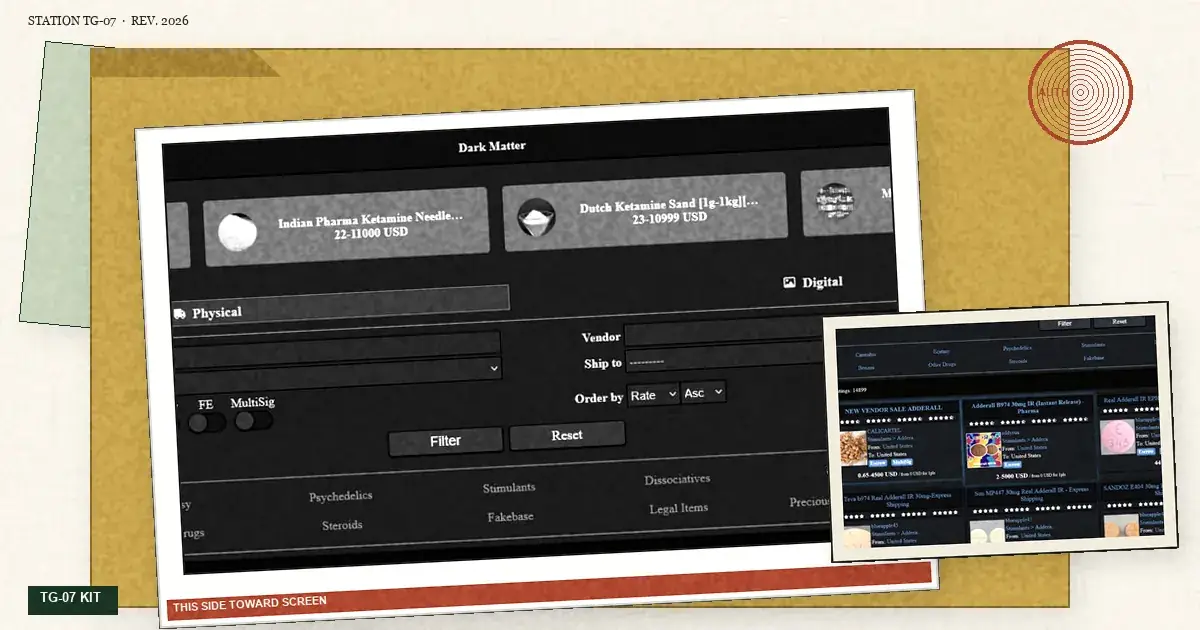
Packing for research on this tor guide begins before any onion string is copied. The decisive item is software provenance: Tor Browser obtained from the Tor Project and checked through the signatures and release information that project publishes. A repackaged browser offered by a market-themed page may look convenient, but convenience cannot compensate for an unknown binary running with the user's permissions.
The second item is an earlier trust reference, such as a PGP key or signed announcement acquired independently of today's search. Without one, a fifty-six-character v3 name can be checked for shape but not attributed confidently. The final item is time; hurried comparison is precisely what lookalike operators expect.
No wallet, deposit note, or transaction sequence belongs in this kit. This is preparation for evaluating documents, not for making a purchase.
I. What this tor field guide packs besides patience
Client provenance is a supply-chain question rather than a settings question. Screens showing security sliders or proxy fields quickly become obsolete and can be copied by anyone. A release downloaded from the Tor Project, accompanied by its published signature material, gives a researcher an attributable upstream. That does not make every destination safe, but it removes one avoidable uncertainty before destination evidence is considered.
Third-party accelerators, portable bundles, browser extensions, and programs advertised as unlocking a particular market introduce code from the party asking to be trusted. The conflict is obvious: a phishing page gains little by persuading someone to inspect a string carefully if it can instead control the application that displays the string. Familiar icons and version labels are presentation, not proof of origin.
A practical packing record can be modest: note the software source, release date, and whether signature verification was actually completed. Do not store sensitive destination notes merely to make the record look thorough. The point is to preserve an auditable decision about the client, while reducing the amount of private material that can leak through screenshots, cloud sync, or later device inspection.
II. Onion itinerary that starts with provenance
The onion itinerary starts with this provenance check because later precautions depend upon a trustworthy display. Comparing a PGP-signed voucher inside a tampered browser is not meaningful; the compromised program can replace either side of the comparison. Likewise, a copy button on an unknown page can place different text on the clipboard from the characters a reader sees.
Once the client question is settled, inspect the source of the identifier. A v3 onion name contains fifty-six characters and is tied to an Ed25519 key, but an attacker can generate another valid name and surround it with copied branding. The useful question is not whether the string looks technical. It is whether the complete string matches a prior statement signed by a key whose fingerprint was established through a separate channel.
Pages that hide an address behind chat prompts, repeated interstitials, downloads, or claims that an account must be created first are manufacturing pressure. That pressure is itself evidence about the page's incentives. A researcher can stop, record the observation, and continue another day without losing any legitimate analytical result.
III. Station notes on wallets, widgets, and harm
Station notes include public-health material because research involving drug-market claims should not isolate digital verification from physical risk. Drug checking where available, naloxone access, awareness of potency variation, and avoiding solitary use are established harm-reduction concerns. Their presence does not validate any listing, recommend a substance, or turn this archive into a clinical service.
A tor guide packing page must also state what it cannot supply. It cannot create a prior trust relationship, certify a market, recover losses, or determine the legality of conduct in a reader's jurisdiction. Legal questions require qualified local advice, while medical emergencies require appropriate emergency or poison-control services rather than a web archive.
The satchel metaphor ends there. Good preparation is mostly refusal: refuse unknown installers, refuse clipboard shortcuts that cannot be inspected, refuse urgency, and refuse to accumulate identifiers without a research purpose. These choices remain useful even after every name and screenshot in the district file has aged.
IV. Packing questions for the satchel card
Where should Tor Browser be obtained?
Use the Tor Project's own distribution and its published verification guidance. Market-branded packages, download portals, and unsolicited mirrors add an unnecessary supplier whose code and update process have not been established.
Why is there no wallet on the packing list?
Because the site documents public claims and verification limits; it does not process payments or teach deposits. Settlement terms are discussed only as vocabulary found in reporting.
What if the reader has no PGP key yet?
Then there is no established cryptographic reference for attributing a voucher. The reader can document what was seen, but should label the identifier unverified rather than allowing the current page to authenticate itself.
Close of sheet
Preparation is complete when the software source and evidentiary baseline can be explained without relying on the destination's own promises. Anything less leaves the most important assumptions hidden.
Keep this card near the tor guide itinerary, and postpone plot research whenever tiredness makes full-string comparison unrealistic. Waiting preserves options; an unknown executable does not. The best-packed session may end before any plot is opened.