Sheet TG-07-F / BORDER
Border Notes on the Tor Guide Desk
Ecology, not a boarding gate.
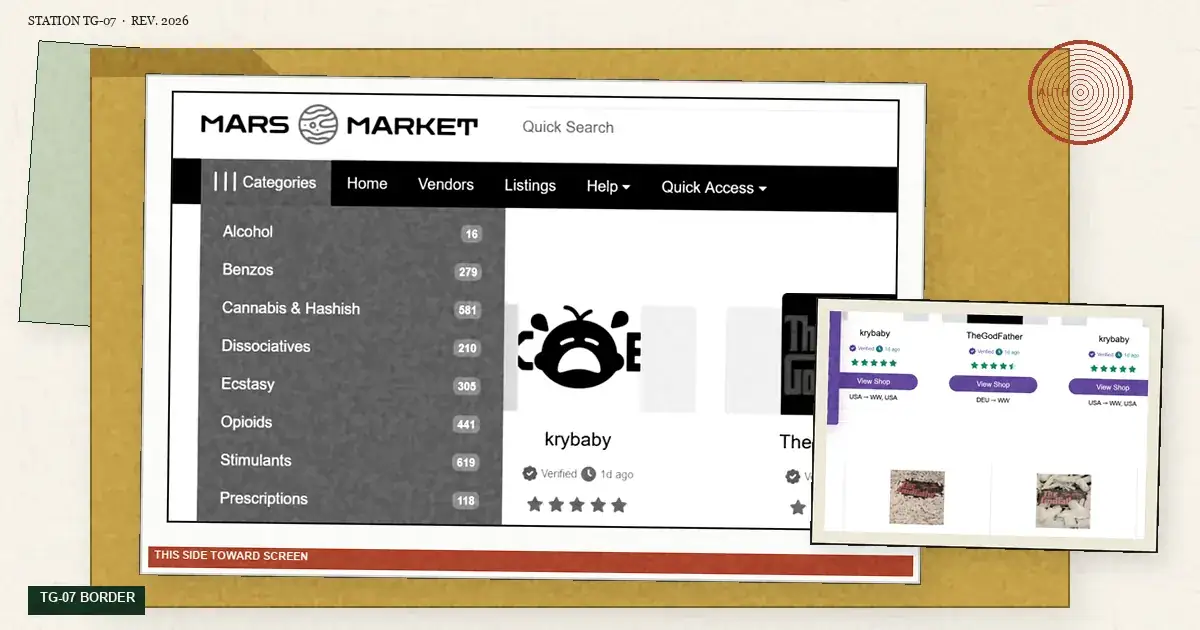
The border described by this tor guide is technical rather than geographical. A .onion name is resolved within Tor's onion-service protocol, not through the ordinary Domain Name System used by mainstream browsers. Therefore a DNS-style failure after pasting an onion name into a conventional browser is expected and says nothing by itself about whether the corresponding service exists.
That distinction matters because deceptive pages interpret the predictable error for the reader, then offer a special extension, helper, or replacement browser. The alleged cure introduces untrusted software at exactly the moment confusion is highest. A correct explanation should reduce that pressure, not exploit it.
This sheet describes the boundary and the evidence available at it. It does not provide a route into commerce or a control that opens a market.
This desk does not include a connect control. Clones that add one are not this station.
I. How this tor field guide describes a habitat edge
A browser normally asks configured DNS infrastructure to map a conventional host name to an address. Onion services use self-authenticating names and rendezvous mechanisms inside Tor instead. The modern v3 name has fifty-six characters derived from an Ed25519 public key plus checksum and version information. Its unusual length and alphabet are protocol properties, not decorative signs of legitimacy.
Because the systems differ, a clearnet page can discuss or print an onion name without becoming part of the onion service. The HTTPS certificate for tor-guide.com authenticates only the clearnet domain covered by that certificate. It cannot vouch for a separate v3 key, and placing both names on one cream card does not cryptographically join them.
The useful response to a boundary error is diagnostic restraint. Identify which kind of name was entered and which client attempted to resolve it; do not infer seizure, retirement, or operator misconduct from the mismatch. Those are larger claims requiring attributable evidence, preferably a statement signed by a previously trusted PGP key.
II. Onion itinerary at the pass, without a widget
An onion itinerary at this border begins with obtaining Tor Browser from the Tor Project and validating its provenance according to the project's current published guidance. It does not begin with a market-branded installer. Upstream provenance addresses the client; it still does not establish that any destination string copied from a search result belongs to the claimed operator.
That second question requires full-string comparison with an independent, earlier source. Multiple mirrors may provide resilience when genuinely controlled by one operator, but a list of three or ten names can just as easily be assembled by an impersonator. Quantity cannot replace a signature, and a working connection cannot establish identity because phishing services are designed to answer reliably.
Avoid reducing the boundary to a sequence of screenshots. Interface labels, security settings, and release behaviour change, making rigid click instructions both fragile and easy for malicious pages to mimic. The durable principles are upstream software provenance, separation of clearnet and onion identities, independent voucher evidence, and permission to stop when one of those pieces is missing.
III. Station notes on law, panic, and connect buttons
Station notes classify common failures before assigning meaning. A conventional-browser lookup error indicates the wrong resolution environment. A Tor connection timeout may reflect service, network, or local conditions and does not identify a cause. A clearnet 404 refers only to a missing archive path. A seizure claim is a separate assertion that needs documentary support rather than visual resemblance to a law-enforcement splash.
The tor guide border page refuses a connect button because such a control would collapse explanation into action and invite clones to substitute destinations. Readers who already possess a verified research identifier can manage it outside this archive. Readers who do not possess one should not be encouraged to treat a button's target as verification.
Jurisdictional questions also remain outside the technical map. Tor has lawful and unlawful uses, and market-related conduct may carry serious legal consequences depending on place and facts. This stationery cannot offer legal advice; it can only keep protocol facts, identity evidence, and unsupported rumours in separate files.
IV. Border questions at treeline
Why does an ordinary browser fail on an onion name?
Because .onion resolution occurs through Tor rather than ordinary DNS. The expected failure identifies a client-and-name mismatch; standing alone, it provides no reliable information about the hidden service or its operators.
Is this sheet teaching people how to reach a market?
No. It explains a protocol distinction, recommends obtaining software from its signed upstream, and discusses verification limits. It provides neither commercial steps nor a destination-opening control.
Are multiple mirrors safer?
They may represent redundancy, but only if identity has already been established. An impersonator can publish many valid-looking v3 names, so each full string still needs comparison with prior signed evidence.
Close of sheet
At the protocol boundary, accurate classification is more valuable than urgency. Determine whether the problem concerns DNS, Tor reachability, a clearnet path, or an identity claim before drawing conclusions.
File this card behind packing and let the tor guide remain on the explanatory side of the pass. Unknown software and unverified buttons do not become safer because an error message felt inconvenient.