Sheet TG-07-P7 / NORTH
We The North Plot Card at Station TG-07
Broadsheet costume. Cream desk. No maple-cyber stall.
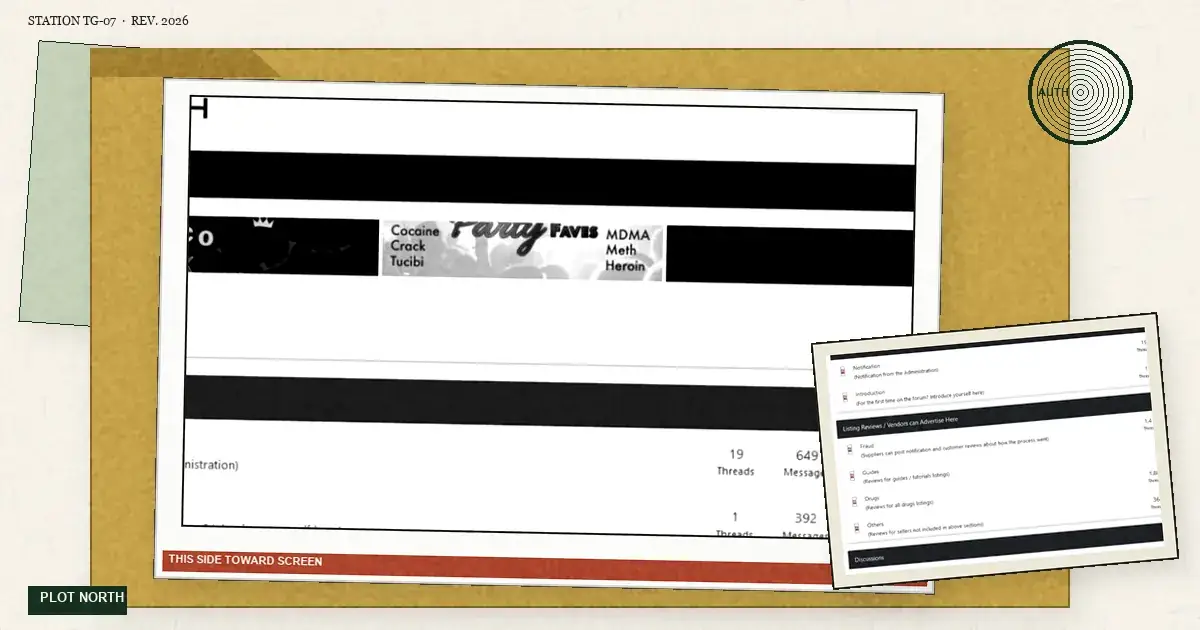
A search for we the north crosses several meanings before it reaches the market name filed here. TG-07-P7 concerns the 2026 capture with a newspaper masthead, cold-paper tones, compact columns, and a maple-red rule. The image is preserved because that civic presentation differs sharply from the dark cyber stall associated with an older site, not because it carries public authority.
Gazettes belong to jurisdictions with identifiable publishers, issue histories, and statutory roles. A themed interface can borrow their mastheads and datelines while possessing none of that framework. The capture's geography is similarly rhetorical: Canadian references locate the brand story, but they do not certify an operator, a server location, legal compliance, product origin, or user safety.
The station recorded three cited strings on 8 September 2026 and limits its claim to that dated sighting. It offers no accounts, listings, payment path, or live connection. A PGP-signed statement from a key trusted before this visit remains the relevant evidence when an identifier here conflicts with another source.
I. How a northern voucher is still a v3 key
A northern-plot voucher is a full fifty-six-character v3 value. Spaces in the common name have no relationship to the random-looking structure of that address, and recognising a word fragment does not verify the rest. Comparison must cover every character against a previously authenticated document rather than a value copied from the same search lane.
The masthead can make self-published notices feel like reported news. Datelines, edition numbers, and formal columns still remain statements made inside the page being assessed. They can document how the operator wished to present information, but cannot independently confirm uptime, mirror ownership, escrow claims, or control of the displayed onion key.
Branded helper applications add another unsupported layer. A download does not become safer because its icon uses a flag or northern landscape. Client provenance should trace to Tor Browser from the Tor Project and its published verification material. This card analyses a visual habitat and does not provide a plot-specific setup sequence.
II. Why a northern market still is not a dateline of trust
A northern market still is best read like an unverified clipping. It can preserve headline wording, category structure, and the date claimed by the interface. It cannot show whether listings were current, whether reviews reflected real events, or whether the photographed address remains under the same control. An archive date and an interface dateline answer different questions.
The maple-red rule is particularly effective branding because a single accent can suggest editorial discipline and national identity at once. Both suggestions are visual inferences. Clones can sample the exact red, reproduce the columns, and copy local vocabulary. Geographic familiarity may lower suspicion, but it contributes no cryptographic proof and provides no safety certificate.
When the clipping contains substance-related claims, independent public-health guidance remains necessary. Drug checking where available, access to naloxone where opioids may be involved, caution about interactions, and avoiding solitary use can reduce harm. None of these measures authenticates an address or validates a listing, and this page supplies no product or purchase advice.
III. Station notes on gazette costume versus cream hygiene
Cited strings are unverified overlays. HTTPS is not a signature. Compare every character to a prior signed note, or treat the paste as a lookalike risk.
Specimen strings — cited plot
- Voucher 1
http://hn2pawv4rhyceppthd7nhwqdj4zyiy3zeru32ja52np2pi7ck3l74jyd.onion - Voucher 2
http://hn2paw2tndelotuegj7hupvuhllh25lzpcdwubteccwhohfciwwolwyd.onion - Voucher 3
http://hn2paweapgk3m6csewnhvtyzhkbpbx423miyj7qra2p3npcfw2c5bdqd.onion
The central test for the we the north card is whether the evidence still makes sense after mentally removing the masthead. What remains is a dated photograph and three reported identifiers. The visual references may explain recognition and phishing risk, but the verification task depends on complete strings, known client provenance, and prior signed material.
No additional address joins the cited-plot panel because a result uses Canadian spelling, sports language, or a familiar red accent. Those cues are inexpensive to reproduce and may target several unrelated audiences at once. A new value must be treated as a new provenance question, not as a plausible edition of the same newspaper.
The districts index places this card among six other habitats without ranking them. That context is descriptive: it shows how different interfaces borrow different institutions for authority. The gazette borrows civic order; other plots borrow medicine, technical standards, corporate restraint, or academic seriousness. None of those borrowed forms signs a key.
IV. Plot questions filed on this habitat card
How should strings on this northern card be treated?
Treat them as dated, unverified citations. Compare every character with a PGP-signed statement from a previously trusted key. This archive records what circulated; it cannot create the trust relationship needed to authenticate it.
Does a masthead in a capture make the plot a public gazette?
No. It shows that the interface borrowed newspaper design. It supplies no jurisdiction, statutory publisher, independent issue record, uptime proof, operator identity, or cryptographic binding.
Is this page a dark-cyber stall in cream clothing?
No. It is an informational habitat card whose cream folders frame a captured broadsheet design. It contains no cart, vendor path, account registration, wallet instructions, or purchase walkthrough.
Close of sheet
The newspaper treatment is useful evidence about how the brand seeks recognition. It is not evidence that the page has the accountability of a newspaper or the authority of a public notice.
Keep we the north as the common name attached to this dated observation, not as a geographic guarantee. Compare complete identifiers with prior signed evidence, distrust familiar regional cues, and leave ownership unresolved when the required cryptographic record is absent.