Sheet TG-07-N9 / CANOPY
Canopy Card on the Tor Guide Desk
Shade. Not soil. Not a stamp.
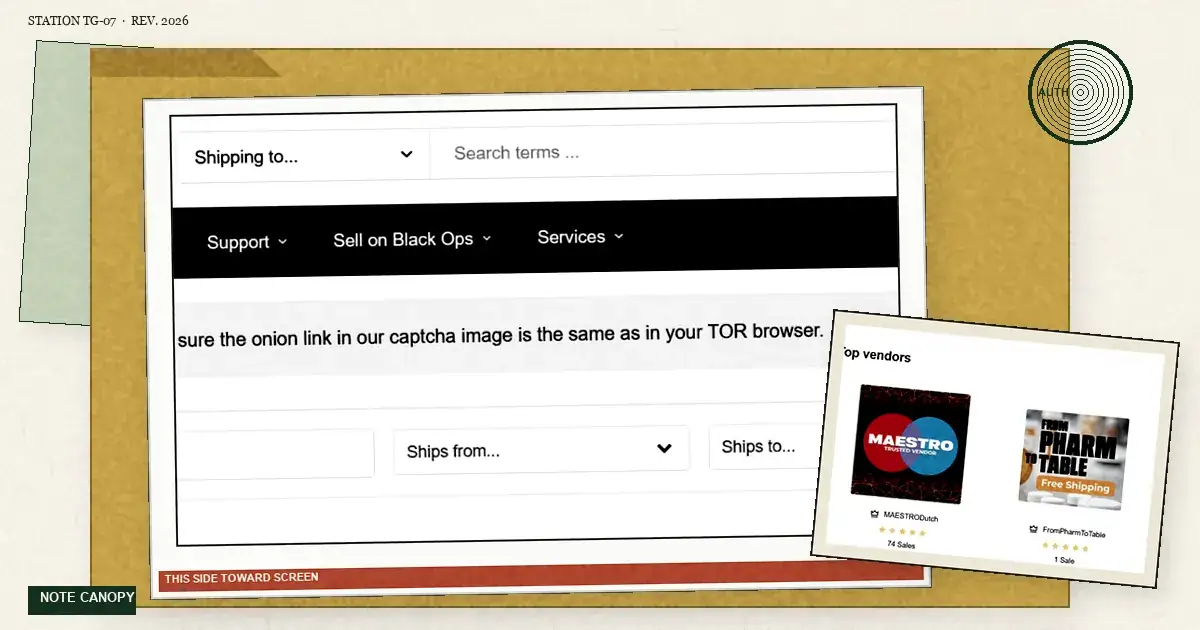
Search results are a changing layer between a reader and the underlying documents. This tor guide treats snippets, advertisements, sudden indexation, and ranking changes as weather observations. They affect what becomes visible first, but they do not authenticate the pages they expose or the onion names those pages repeat.
A top result may reflect relevance systems, links, freshness signals, localization, or paid placement. A copied page can satisfy many of those conditions as readily as an original source. Search engines organize discoverability at enormous scale; they do not perform cryptographic identity checks on hidden-service brands for each query.
Weather still deserves study. A flood of nearly identical titles may reveal affiliate activity, and an ad campaign may explain why one phrase suddenly dominates discussion. The mistake is allowing that useful context to become a verdict about operator control, current reachability, or safety.
I. How this tor field guide reads snippet shade
Read a snippet as text selected or supplied for a result, sometimes by the publisher and sometimes by the engine. It may omit qualifications found on the page, combine fragments, or preserve wording after the destination changes. Open context carefully before quoting it as a claim.
Terms such as official, verified, working, and limited-time belong to persuasive copy unless evidence gives them a precise meaning. Replace them in notes with observable descriptions: advertised on this date, indexed at this position, cited without a signature, or attributed to a named source.
Repeated phrasing across domains can indicate syndication rather than independent confirmation. Search a distinctive sentence mentally as a lineage marker: if every result appears to inherit one paragraph, count one unsupported source family, not a chorus of witnesses.
II. Onion itinerary that treats ads as hostile canopy
Advertisements are explicit placement purchases, not vouchers. An ad may contain a correctly shaped onion name, but payment for visibility supplies no relationship to a previously trusted operator key. Copy the claim into the evidence ledger only if its commercial source remains attached.
Click mazes, chat unlocks, notification prompts, and downloadable link finders increase fatigue before presenting a destination. That exhaustion can make the final copy button feel earned and therefore trustworthy. The feeling reflects effort invested, not evidence obtained.
If an ad brought the reader here, that origin should remain part of the note. Attribution helps explain urgency or wording that arrived with the session and prevents the station's calm design from laundering the advertisement's unsupported claims.
III. Station notes on indexation as weather
Indexation proves that a crawler accepted a URL into a search system at some point. Lookalikes, abandoned pages, and contradictory directories can all be indexed. Fast inclusion is a technical event, not a tree ring showing age or legitimacy.
Section III asks whether the tor guide method still works after result positions are removed from the page. If a claim loses all support when its rank is hidden, ranking was acting as authority rather than helping discovery.
This host may itself appear in results, but that does not elevate its ornamental stamps or cited onions. Its value must come from transparent dates, source limits, and non-transactional analysis. Search visibility cannot grant permissions the evidence does not contain.
Search engines also revise snippets without the publisher changing the page. A removed warning or newly emphasized phrase can alter the apparent claim overnight. Quote the source document with a date when wording matters, and preserve the result snippet only as evidence of presentation.
Indexation can lag publication or outlast deletion. Cached titles, copied descriptions, and stale result URLs therefore belong to a chronology rather than a binary present-or-absent test. Their persistence explains discovery but cannot establish current control of a domain or key.
IV. Note questions on this field card
Does a high ranking indicate authenticity?
No. Ranking reflects search and advertising systems, not cryptographic control of a claimed onion identity. Original and cloned pages can both rank.
How should advertisements be recorded?
As paid placements observed on a stated date, with their claims kept separate from signed voucher evidence. Payment for visibility neither authenticates nor automatically disproves the destination.
What does rapid indexation prove?
Only that a search system discovered and accepted a URL quickly. It says nothing reliable about operator identity, history, hidden-service reachability, or the truth of page content.
Close of sheet
Use search to locate documents, then let the documents stand on their own evidence. Position, snippet polish, and repetition can explain visibility without settling authenticity.
The tor guide records search conditions as temporary weather. When the result page changes tomorrow, dated vouchers and explicit uncertainty should remain intelligible.