Sheet TG-07-N1 / TRANSECT
Transect Card for the Tor Guide Walk
A line through canopy. Not a shopping crawl.
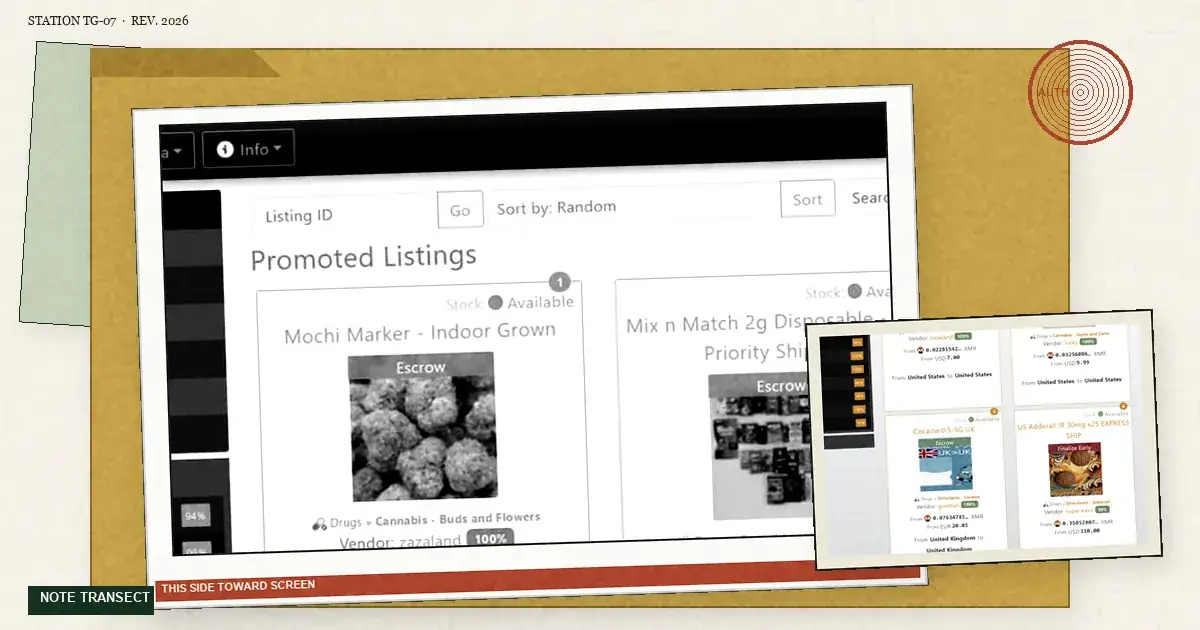
A search query can be walked like a measured line across a field. On this tor guide, the starting peg is the phrase a reader typed, and the finishing peg is one dated voucher examined with care. Everything encountered between those points is recorded as context rather than collected as treasure. The discipline matters because result pages are designed to turn curiosity into a succession of clicks.
A proper transect has boundaries. It does not expand whenever an advertisement promises another mirror, a forum post names another brand, or a snippet claims a sudden return. Those are observations beside the line. Adding each of them to an itinerary would change a modest research exercise into a binge, and tired comparison is poor comparison.
Station TG-07 therefore asks one useful question at each stop: what kind of evidence is this? A result position is evidence of indexation. A photograph is evidence of an interface capture. A signed document may identify a key. None of those statements requires opening inventories, rating vendors, or following a purchase path.
I. How this tor field guide marks a walking line
Before the walk begins, write down the query and the date. That small act prevents memory from quietly replacing the words that actually produced the results. Search pages change by location, language, advertising inventory, and time; a later retelling that omits those conditions sounds more authoritative than the observation deserved.
Move down the results once, distinguishing advertisements, snippets, copied directories, discussion pages, and prior documents. The aim is not to award a winner. It is to see how one name is represented and where claims repeat without independent support. Ten sites repeating the same sentence may trace back to one affiliate paragraph.
Choose one voucher for close reading only if there is a prior signed source against which it can be compared. Otherwise record that the source was unsigned and end the line. A missing reference is a finding, not an invitation to substitute confidence for evidence.
II. Onion itinerary that refuses souvenir stalls
Search results contain stalls built for detours: urgent verbs, oversized copy controls, promises of exclusive alternatives, and lists long enough to make checking feel impossible. Their business model benefits when a reader treats movement as progress. A measured walk benefits from the opposite habit, because every added specimen creates another opportunity for a skipped character.
The useful response to a stall is classification rather than argument. Mark it as an ad, an affiliate page, or an unsupported directory and continue along the original line. Do not reward a maze that withholds information behind a download, chat prompt, registration form, or supposed access helper. Friction can be a sales device as easily as a safety measure.
An onion itinerary on this sheet ends after one well-described exhibit. There is no prize for returning with seven copied names. A single voucher compared in full reveals more about method than a notebook full of unchecked strings, and it leaves fewer stale fragments to circulate later.
III. Station notes on when to stop walking
Stopping rules belong in the method before fatigue arrives. End the walk if the search begins to repeat one unattributed claim, if a page tries to install software, if no prior trusted key exists, or if concentration has narrowed to prefixes and suffixes. The middle of a long identifier is precisely where hurried eyes become generous to impostors.
Section III is where the tor guide records the result: one query walked on a stated date, one voucher considered, and any authentication gap left visible. It does not infer reachability from a search result or operator identity from a theme. A limited conclusion is stronger than a broad conclusion assembled from weak observations.
Afterward, file the note behind the survey card and leave enough detail for another reader to reproduce the classification, not the browsing session. Date, query, evidence type, and uncertainty are enough. Inventory captures, account details, and transaction lore would not improve the transect; they would only change its purpose.
IV. Note questions on this field card
Why limit a transect to one voucher?
One carefully compared specimen keeps attention on all fifty-six characters and on the source that supplied them. A larger haul rewards speed, increases fatigue, and produces a collection that may be copied later without its warnings.
What can a search result establish?
It can establish that a page was indexed or advertised when the observation was made. Its position cannot establish operator identity, current reachability, stock, escrow behavior, or the authenticity of an onion name.
Is this a route into a hidden service?
No. It is a research method for classifying public search evidence. It supplies no connect control, purchase sequence, account advice, or instructions for entering a market.
Close of sheet
A good line is modest enough to describe in one dated paragraph. If the account requires trophies, rankings, and a dozen tabs to sound worthwhile, the walk has already exceeded its evidence.
Return the card to the file with one honest conclusion. The tor guide values a complete comparison over a crowded collecting bag, and an explicit stop over a careless extra paste.