Sheet TG-07-N4 / TAXON
Taxonomy Card on the Tor Guide Desk
Names are cheap. Keys are not.
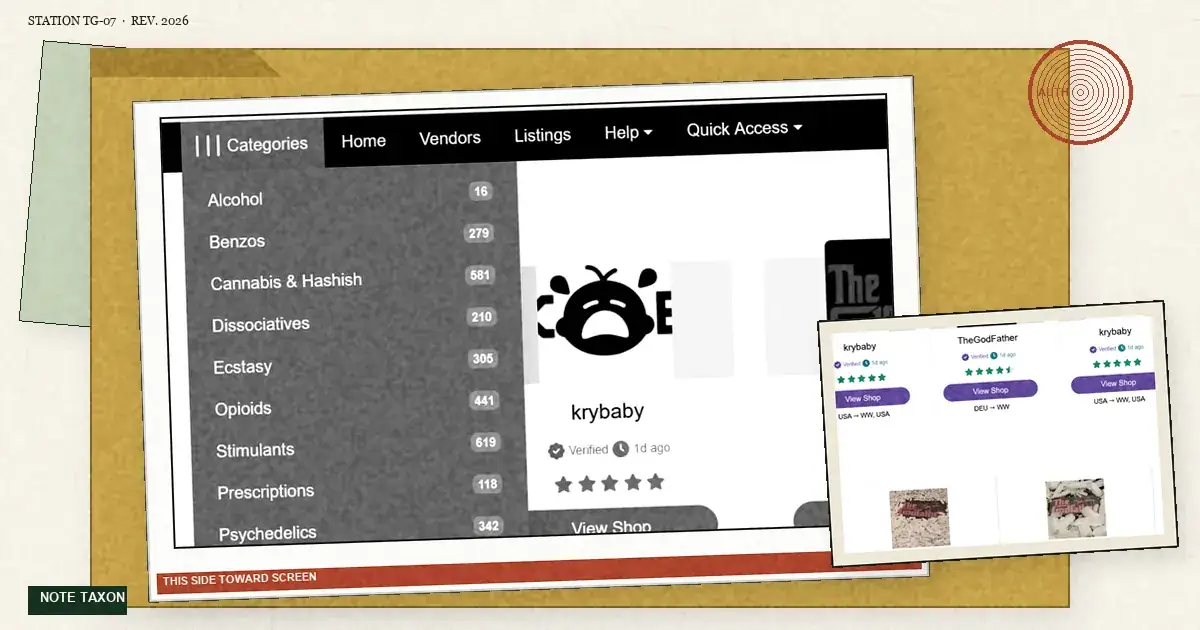
Naturalists tolerate common names because they make conversation possible, but they do not expect a nickname to settle identification. The same restraint belongs on a tor guide. Nexus, Torzon, Mars, and similar brands are convenient filing terms. Any server can display those words, reproduce their colors, and imitate their familiar navigation.
A v3 onion name belongs to a different category. Its fifty-six characters encode information derived from a cryptographic key. That makes it a precise identifier, but not automatically the identifier of the operator claimed by the surrounding page. The missing step is evidence binding the key to the claimed identity.
Confusion begins when search results put the common name in large type and hide the identifier behind a button. Memory retains the brand and perhaps a short prefix, while the meaningful differences disappear into the middle. Taxonomy is therefore a practical anti-phishing habit, not decorative scientific language.
I. How this tor field guide splits a name from a specimen
On the sage card, write the common name as a subject heading. On the voucher sheet, record the complete onion name, date, source class, and signature status. Separate fields prevent a recognizable logo or phrase from leaking into the judgment about the identifier.
Interface themes belong with exhibits. Shared navy, rust, medical red, or newspaper type can show imitation, fashion, or common designers, but it cannot establish common control of keys. Visual kinship is a hypothesis about pixels, not cryptographic evidence.
Likewise, inclusion on the districts index means the brand was part of the 2026 gathering. It is not a type specimen, endorsement, uptime finding, or claim that one surviving address owns the name. Indexes arrange subjects; they do not certify them.
II. Onion itinerary ruined by mixed labels
Advertisements deliberately collapse the categories. A brand name, green checkmark, and copyable identifier appear as one unit so the viewer experiences recognition before comparison. Pull them apart: the brand is a claim, the checkmark is artwork, and the string is an object requiring independent support.
Cloned brands are especially effective when an older operator has disappeared or rotated addresses. Searchers remember the short name and seek its return, while impostors need only reproduce that memory and generate a valid-looking v3 address. Nostalgia can become an authentication substitute without anyone stating the substitution aloud.
The labels and voucher cards continue this division from opposite directions. Labels catalogue copyable marks; vouchers catalogue dated strings. Neither card can create a prior trusted key, and both should say so before their metaphors become comforting.
III. Station notes on official as a taxonomic error
Official is not a cryptographic rank. On an unauthenticated page it is merely a self-description, and clones can print it with the same confidence as the party they imitate. Prefer factual labels such as cited, dated, signed by a named key, or unsigned.
Section III is successful when the tor guide lets a reader describe the exact gap: the common name is known, the page resembles prior captures, but control of the presented key has not been established. Precision leaves less room for a brand to smuggle certainty into the sentence.
Even this station's naturalist vocabulary must not impersonate authority. Latin-sounding categories, file codes, and careful typography are organizational devices. If a signed document from a previously trusted key conflicts with this sheet, the signed evidence outranks the stationery.
Taxonomic caution also improves corrections. Editors can change a common-name heading without implying a key rotation, or update a voucher without pretending the brand itself changed. Separate records make both events legible.
IV. Note questions on this field card
Is a brand name evidence of operator identity?
No. A brand is a common name that can be copied onto any interface. It is useful for organizing discussion but cannot bind an onion key to a particular operator.
What does a v3 onion name identify?
It identifies a service key through a fifty-six-character name. Establishing that the key belongs to the claimed brand requires separate, prior trusted evidence such as an appropriate signed statement.
Why avoid calling a page official?
Because the page can make that claim about itself. Descriptions tied to observable evidence—dated, cited, signed, or unsigned—are more informative and easier to challenge.
Close of sheet
Keep the short name for the folder tab and the long identifier for the evidence record. When those roles are reversed, recognition begins doing work that only authentication should do.
The tor guide closes this card with a narrow rule: brands may be cloned perfectly, keys must be compared independently, and attractive taxonomy never bridges the gap.