Sheet TG-07-N14 / SEASON
Season Card on the Tor Guide Desk
A gathering year. Not a forever shop.
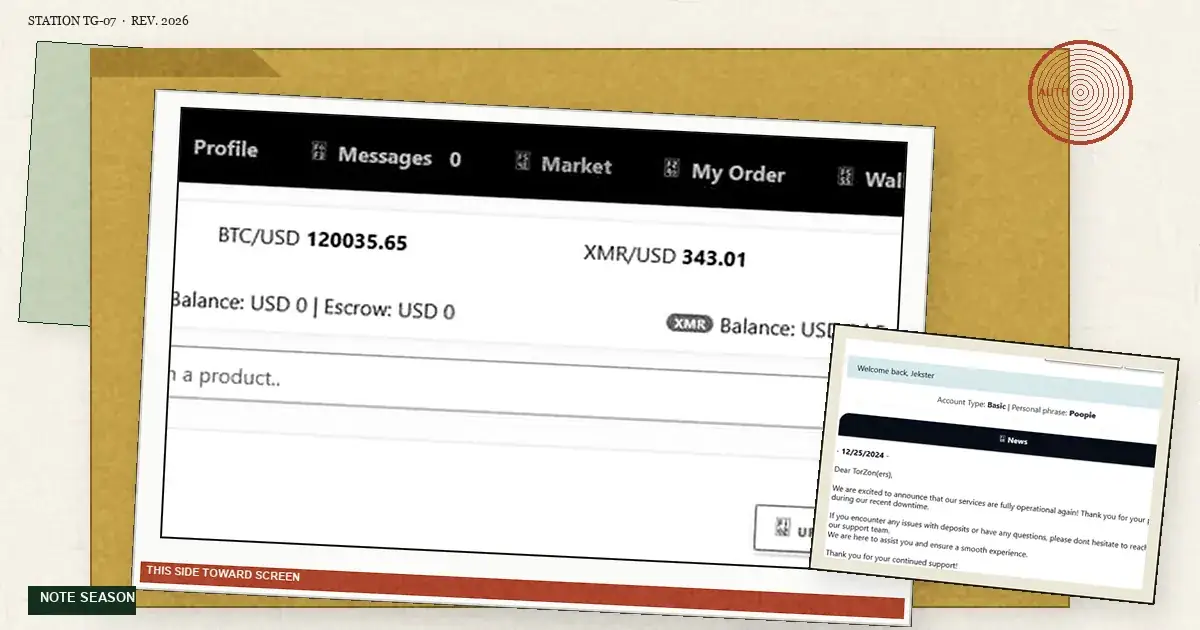
The year 2026 defines the gathering represented by these files. On this tor guide, it groups subjects, cited strings, design captures, and editorial questions that circulated during a particular period. It does not promise that every object remained unchanged for twelve months or will remain useful after the year ends.
Directories often attach a year to words such as working, current, or permanent, then keep the same promise when the calendar changes. A collecting year serves the opposite purpose: it limits the claim. Later readers should approach the paper as a historical layer and seek current signed evidence for anything time-sensitive.
The station can remain online after its season without pretending to be a live service. Archives gain value by showing what people recorded and how they reasoned at the time. Their dates become misleading only when publishers erase them or use automatic labels to imitate continuous inspection.
I. How this tor field guide marks a collecting year
File codes beginning TG-07 identify the station set, while 8 September 2026 identifies its typesetting day. Those marks describe publication work. They are not timestamps for market probes, transactions, or simultaneous operator statements.
A later revision should add a genuine date and explain substantive changes. Correcting typography is different from replacing a cited identifier, and the record should make that difference visible. Revision history allows readers to separate editorial maintenance from new evidence.
The journal focuses on the day, and the climate card discusses changes in public talk and search visibility. The season page holds the broader frame so neither a daily stamp nor a ranking fluctuation is mistaken for a forever guarantee.
II. Onion itinerary that refuses forever-working banners
Forever-working is implausible language for services whose keys rotate, infrastructure fails, and names are copied. The phrase is useful to affiliates because it suppresses the need for dates. It is not useful to a reader trying to evaluate provenance.
A 2027 visitor should not seek reassurance from a larger 2026 banner. The correct response is to regard the citations as old, consult appropriately signed current sources, and preserve any disagreement rather than assuming the newest search result wins.
Visual redesigns do not create new seasons of trust. Clones can update colors, year labels, and badges faster than they can establish key continuity. Compare chronology and signatures, not whether the page looks recently typeset.
III. Station notes on ending a gathering
A gathering ends when its editorial scope has been recorded. This page makes no automatic-update promise and offers no subscription, status feed, or live directory. Future work may produce a separately dated revision, but currentness is not simulated between editions.
Section III lets the tor guide remain a 2026 document instead of repainting itself every January. The method—date claims, classify sources, compare full identifiers, and stop when evidence ends—can outlast the individual citations without making them timeless.
Harm-reduction context is not tied to a market season. Where discussion concerns substances, established public-health guidance on testing, naloxone access where relevant, and avoiding use alone remains important. That continuity does not validate any listing or transform the archive into a catalogue.
Seasonal archiving should preserve absence as well as presence. If a subject later disappears from discussion, the 2026 card can remain without predicting why. Outage, retirement, enforcement, and rebranding are different hypotheses that require evidence beyond silence.
The archive may also receive corrections that do not restart the gathering. Spelling repairs and accessibility improvements should be logged honestly but should not imply a new survey. Evidence changes deserve a new dated edition with a clear account of what moved.
IV. Note questions on this field card
Does the 2026 label guarantee year-long availability?
No. It identifies the collecting period. Services may rotate, disappear, or be cloned at any time, and this static publication does not monitor them.
Will the page silently become a 2027 guide?
No. A later gathering or substantive revision should carry a real date and explain its changes. Replacing the year automatically would manufacture freshness.
How should future readers use this card?
As dated archival context. Recheck time-sensitive identifiers against current signed evidence and preserve differences instead of treating old captures or year labels as live status.
Close of sheet
A season gives the archive edges. It permits later evidence to replace old claims without pretending that the earlier gathering watched events continuously.
Leave 2026 visible on the folder. The tor guide is a dated gathering, not a forever directory, and its method remains useful precisely because its citations are allowed to age.