Sheet TG-07-N5 / PRESS
Pressings Card on the Tor Guide Desk
Exhibits. Not doors.
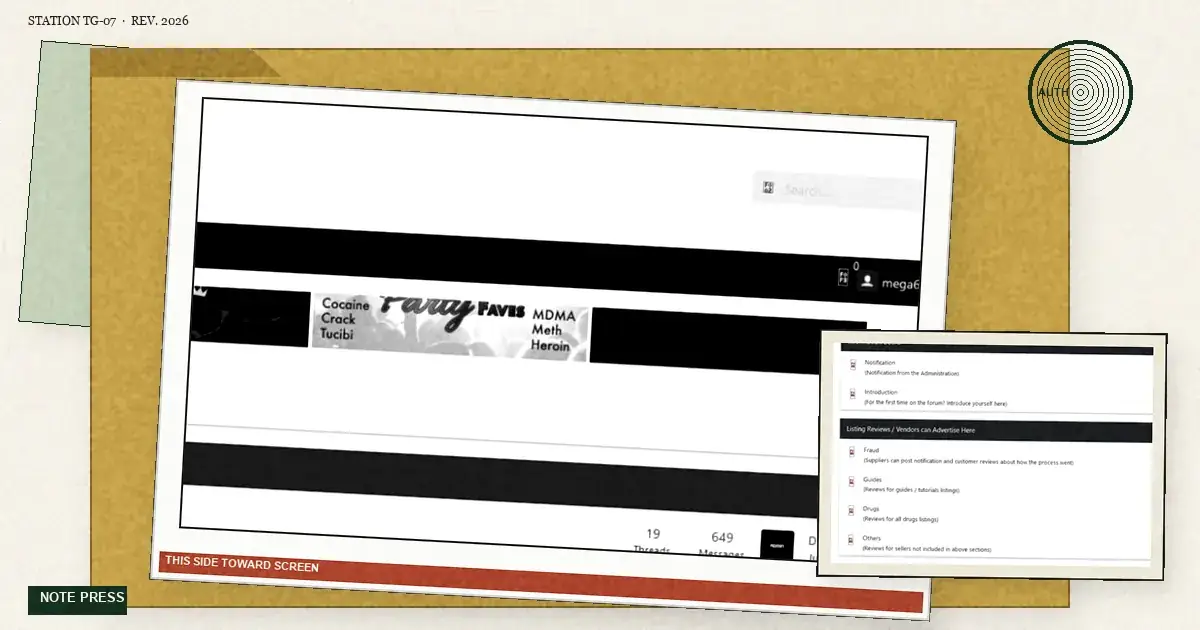
A photograph preserves appearance at one moment while removing most of the surrounding conditions. On this tor guide, interface captures are mounted as pressings so that limitation remains visible. A still may show a header, warning, category layout, or date. It cannot reveal who controlled the server or whether the pictured claims were true.
Screenshots feel persuasive because they borrow the visual language of direct experience. Yet the viewer cannot inspect the captured response, verify the address bar outside the crop, or know what was changed before export. The correct evidentiary statement is modest: someone supplied or made an image of an interface.
The exhibit metaphor also prevents accidental conversion design. A framed WebP is not a preview pane, and it should not invite entry. There are no play controls, live badges, hover portals, or buttons positioned over the picture. The image remains an object to discuss rather than a destination to activate.
I. How this tor field guide flattens a capture into a pressing
Each page can use a different crop of an operator-provided capture to keep its social image specific to the subject. That editorial variation does not create different underlying evidence. Seven unique OG compositions may still derive from the same small group of screenshots, and none carries a unique cryptographic key.
Grain, paper texture, grey treatment, and a physical-looking border announce mediation. They show that the station has edited a photograph into an exhibit. Those choices may improve legibility or establish visual identity, but they must never be described as forensic enhancement or authentication.
Alt text should identify what can actually be seen: a photograph of a captured interface, a header, or a mounted detail. Phrases such as enter, live market, or verified destination would turn accessibility text into promotional copy while claiming more than the pixels support.
II. Onion itinerary that lets photographs lie usefully
Every photograph lies by exclusion. A crop removes browser context; a monochrome treatment removes color; a mount suggests an archival object. Those visible editorial choices can be useful when captions state them. The dangerous lie is to conceal the editing and imply that the image is a live or complete view.
Play triangles are particularly misleading on static captures because viewers have learned to interpret them as working media. Online-now badges and animated status dots create the same false expectation. This page uses ordinary images with dimensions and captions, so their technical behavior agrees with their evidentiary role.
A warning banner visible inside a screenshot is part of the exhibit, not a warning delivered by this station. It may document wording used by an interface, but it does not follow the viewer to another page and cannot validate an address supplied elsewhere.
III. Station notes on stills that pretend to authenticate
When two pages display the same screenshot, the image cannot decide which page is genuine. Shared captures spread easily through affiliates and cloning kits. Compare independently signed identifiers, publication history, and explicit uncertainty rather than treating possession of the pixels as evidence of control.
In section III, the tor guide records photographs as exhibits and nothing more. A crop can be unique to this URL while the key question remains entirely open. That separation keeps graphic design from drifting into a silent endorsement.
Photographs can still be valuable historical sources. They preserve interface language, visual conventions, and claims worth analyzing. Their value increases when dates, provenance limits, and edits are disclosed; it decreases when a page stages them as windows into present activity.
IV. Note questions on this field card
What does an interface pressing prove?
It shows that an image containing the depicted interface existed. Without additional provenance it does not prove the service key, operator, live status, inventory, or truth of text visible in the capture.
Why use different OG crops on different pages?
Distinct crops make each sharing card relevant and avoid repetitive artwork. The variation is editorial, not cryptographic; unique compositions do not imply unique keys or independent sources.
Why are there no play buttons?
The source files are still photographs, not streams or interactive previews. A play control would falsely imply live media and pull an informational exhibit toward destination marketing.
Close of sheet
A useful pressing survives after its glamour is removed: it has a date, an honest caption, and a clear account of what falls outside the frame. Motion and urgency would add persuasion, not evidence.
The tor guide leaves photographs mounted and finite. Unique crops serve the page design, while authentication remains the work of prior trusted signatures rather than pixels.