Sheet TG-07-H2 / BTC
Bitcoin Notes on the Tor Guide Desk
A circulating label. Not a quote board.
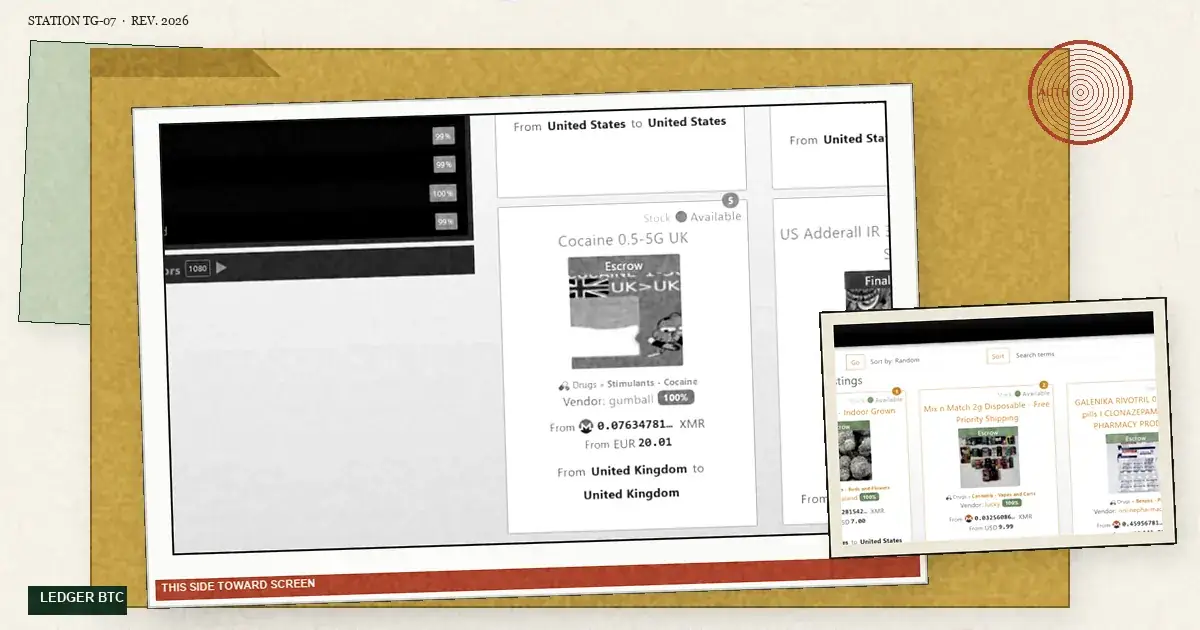
Bitcoin enters this tor guide as a historical marker. Older market captures, inherited templates, and contemporary clone pages still display BTC language even where newer reporting emphasises other rails. That persistence can help researchers trace interface ancestry or recognise stale copy, but it does not make the archive a rate board and does not invite a transaction.
A coin logo in a screenshot is evidence about presentation. It cannot establish that a destination was controlled by the named operator, that a quoted amount was current, or that an escrow arrangement worked as advertised.
This card examines why the label survives and how to cite it without reproducing wallet guidance, mixing instructions, or claims about supposedly clean funds.
I. Why this tor field guide still files the bitcoin label
Legacy vocabulary often outlives the system that first displayed it. Clone builders copy complete templates because old pages already rank, and small details such as BTC icons, fee labels, or help text may persist unnoticed. Those details can therefore indicate that an interface borrowed from an earlier design, although similarity alone cannot identify who performed the copying or when.
Dated comparison is more useful than declaring a label obsolete. A capture filed on 8 September 2026 may show bitcoin wording that another version lacks. Recording both observations allows a later reader to ask whether the source changed, the capture was old, or two different implementations shared a name. Erasing the awkward label would remove evidence needed for that question.
The station does not reproduce transaction identifiers or destination strings from captures. Such data may expose private activity, invite misinterpretation, and serve no purpose in documenting interface language. A description can note that a payment claim appeared while withholding actionable financial details and avoiding screenshots that centre them.
II. Onion itinerary versus instant-access banners
An onion itinerary cannot use BTC branding as an identity check. A lookalike can display the same symbol, while a correctly formatted v3 name can still belong to an attacker. Attribution requires comparison of all fifty-six characters with an independently obtained, preferably PGP-signed statement linked to a previously trusted key.
Phrases such as instant access or confirmed payment create urgency while shifting attention away from that comparison. The archive treats them as persuasive language in the source, not as promises to repeat. It also avoids chain-analysis and mixer procedures, which would be operational financial guidance rather than evidence assessment.
The sibling Monero card serves a different analytical purpose. XMR language illustrates current privacy rhetoric; BTC language often reveals historical residue and cloning. Keeping separate sheets prevents the broader ledger from pretending the two terms are interchangeable or from flattening distinct documentary patterns into generic payment copy.
III. Station notes on seeds, screenshots, and carts
Station notes also reject seed-phrase prompts, wallet connections, hardware recommendations, and transaction support. None is needed to understand why bitcoin appears in a capture. More importantly, each would give a copied page a place to steal credentials or redirect value while preserving an academic-looking frame.
The tor guide bitcoin sheet treats numerical prices with similar caution. A figure in a screenshot belongs to the photographed moment and may be fabricated, stale, or disconnected from any completed exchange. It should not be restated as a quote, compared as a bargain, or used to imply inventory.
Where BTC discourse appears next to drug listings, physical harm-reduction questions remain independent. Neither blockchain visibility nor a transaction confirmation says anything about composition, dosage, contamination, or overdose risk. Digital settlement evidence must not be allowed to borrow credibility from public-health language, or vice versa.
IV. Bitcoin questions without a destination
Can a reader pay this host in bitcoin?
No. The archive has no checkout, destination address, wallet connection, or payment support. A copy requesting bitcoin is a different site performing a different and potentially harmful function.
Why keep a BTC card if gossip prefers another rail?
Because old interface material and copied templates still contain the label. Preserving that fact can reveal chronology and reuse without implying that BTC is currently accepted anywhere.
Is a coin logo on a capture a rate?
No; it is a visual element in a dated exhibit, not a rate. It neither establishes a current price nor proves that a payment system behind the pictured interface functioned.
Close of sheet
Treat bitcoin language as a clue about the document carrying it, not as a destination or recommendation. Its greatest value here may be the age and lineage it helps expose.
The tor guide keeps the BTC card because archives retain inconvenient evidence. They do not turn that evidence into a quote board, a privacy promise, or a route for sending funds.