Sheet TG-07-N6 / LABEL
Label Card on the Tor Guide Desk
Stickers peel. Keys do not.
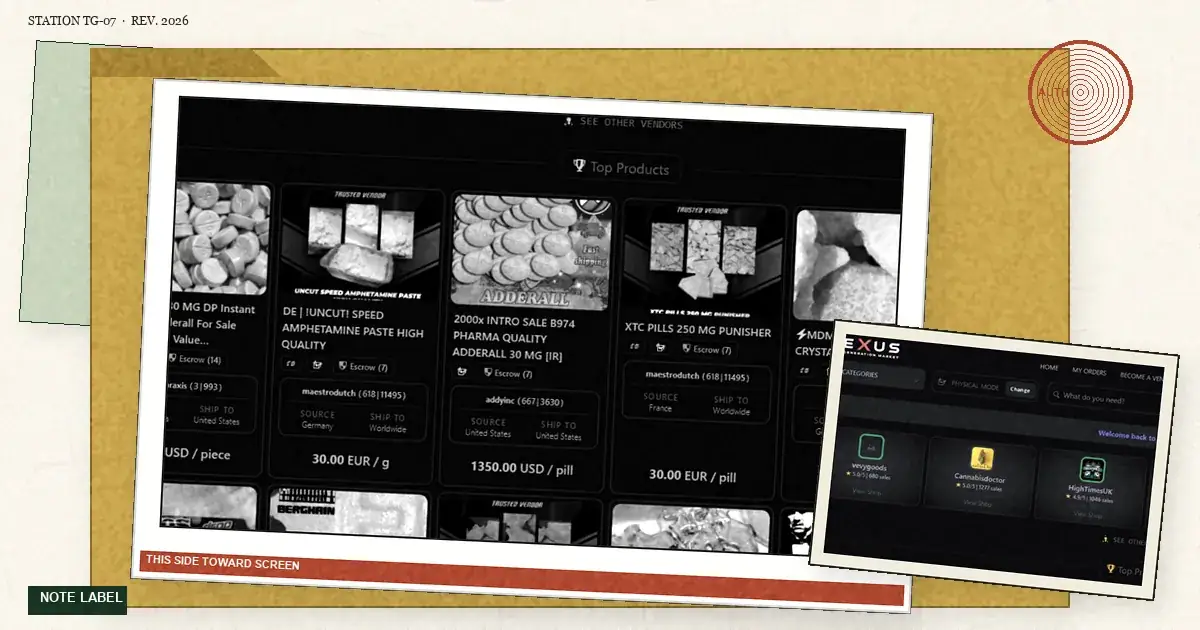
Logos are excellent labels because people recognize them quickly, and poor authenticators for exactly the same reason. This tor guide files wordmarks, ribbons, icons, and patches as stickers attached to an exhibit. They help identify the subject a screenshot claims to depict; they do not establish who made the claim.
Digital marks have no scarcity. A clone can trace an emblem, copy its SVG, sample its colors, and reproduce years of brand familiarity before lunch. Even imperfect copies may work because recognition fills gaps and encourages a viewer to overlook the fifty-six-character object that actually differs.
Station TG-07 applies the same criticism to itself. Its wordmark, embroidered-looking badges, file codes, and folder tabs are local design elements. They distinguish this publication visually, but another host could copy them. The canonical domain identifies this clearnet page; it does not authenticate an onion service discussed on the page.
I. How this tor field guide files a sticker without believing it
Describe a logo as part of the photographed interface and keep that observation separate from the voucher record. If the mark changes between captures, that may be useful design history. It still does not explain whether the underlying service key changed, remained, or ever belonged to the claimed operator.
Badges reading verified, authentic, or trusted are assertions rendered as artwork. Their visual polish often bypasses the skepticism a sentence would receive. Translate each badge back into plain language—this page says it verified itself—and the evidentiary weakness becomes easier to see.
Decorative patches on this site are intentionally tactile and slightly theatrical. Their thread, border, and station codes belong to the naturalist theme. No schema, caption, or body copy should present them as certificates, and no reader should treat their repetition as institutional authority.
II. Onion itinerary that treats ad badges as weeds
Search ads compress a logo, an urgency phrase, and a destination claim into a small rectangle. Following the familiar mark can feel safer than following text, but the advertiser controls both. Record the placement as an ad and require the same independent voucher evidence you would require from an unknown name.
Checkmarks are particularly portable. Market clones, directories, browser extensions, and review sites can all draw the same symbol while using incompatible standards or none at all. A mark without a verifiable method is decoration whose meaning changes with its publisher.
If a page copies TG-07's cream folders and then adds registration, wallet, or connect controls, the copied wordmark does not preserve this station's purpose. Read the actual refusals and page behavior. Identity inferred from surface resemblance is the failure the label card exists to expose.
III. Station notes on this host's own label
The file code TG-07-N6 locates a sheet within this project. It is not a registration number issued by an outside body. A copied code would remain typographically correct while saying nothing about the copier's relationship to the original files.
Section III turns the lens inward: the tor guide asks readers to distrust its own wordmark whenever it appears outside the expected canonical host. That advice is more important than preserving a seamless brand, because a safety method that exempts its publisher becomes marketing.
Use this site's dates, informational scope, absence of transactional controls, and explicit source limits to understand what document you are reading. Those features describe editorial practice. They still do not make this publication a root of trust for any third-party onion name.
A sticker can remain useful after losing its authority. It can group related captures, support accessible descriptions, and help readers find a file again. Those modest jobs are enough; asking the mark to certify identity only makes it easier to abuse.
IV. Note questions on this field card
Can a familiar logo identify the genuine service?
No. Logos and interface themes are freely copyable. They can identify what a page claims to represent, but the claim must be tested against prior trusted signed evidence.
What does the TG-07 wordmark certify?
Nothing. It is this host's visual label and filing device. The canonical domain locates the publication, while its methods and limits describe the work; neither authenticates outside services.
Are verified badges meaningful?
Only when an independently assessable method and trustworthy issuer stand behind them. A self-issued checkmark or ribbon is an assertion in graphic form, not proof.
Close of sheet
Labels make archives navigable, but navigation and authentication answer different questions. Keep the logo with the exhibit and the full key-derived name with its dated source record.
The tor guide treats every sticker consistently, including its own. Recognize the design if useful, then set it aside before judging an onion identifier.