Sheet TG-07-N7 / JOURNAL
Journal Card on the Tor Guide Desk
Ink with a day. Not a ticker.
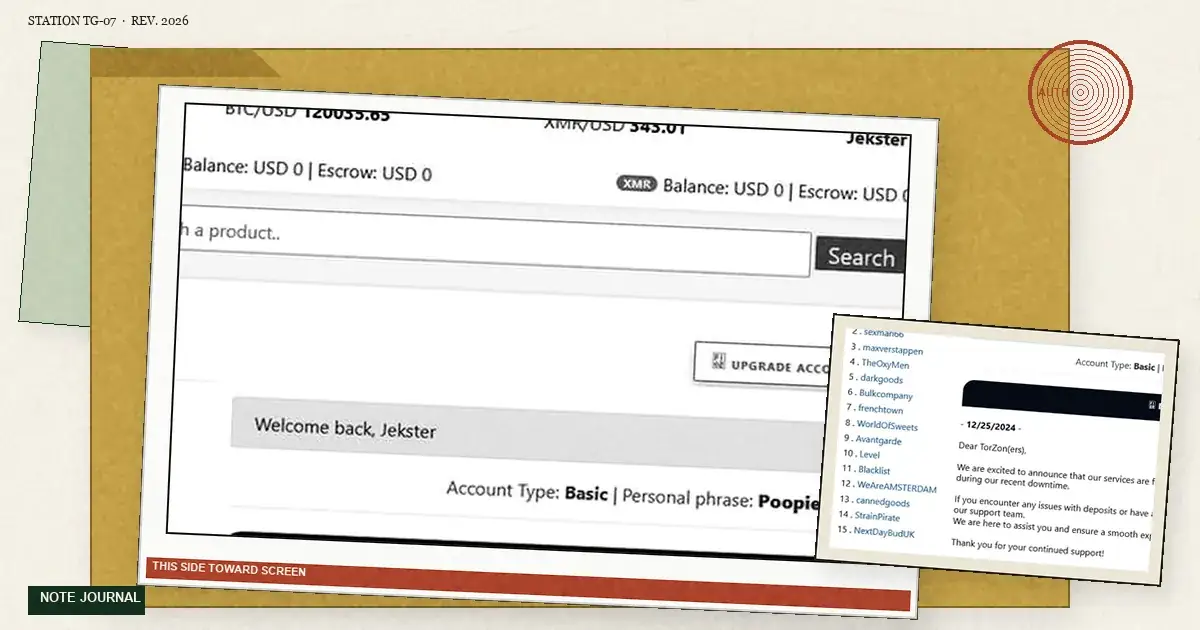
The date 8 September 2026 records a typesetting day, not a simultaneous inspection of every service mentioned here. On this tor guide, the date belongs to the gathering of text, citations, and image treatments. It tells a later reader when the editorial object took its present form and where aging should be expected.
Static hosts often disguise age with live-sounding labels: updated moments ago, online now, or a clock that always displays the viewer's current time. Such devices can be generated in the browser without any measurement behind them. Their freshness is theatrical because the underlying article and evidence may not have changed.
A visible old date is more useful. It does not declare a cited string dead, but it clearly transfers the burden back to current signed evidence. The page can then age honestly instead of imitating telemetry it never collected.
I. How this tor field guide uses a collecting day
Typesetting includes editing prose, assigning file codes, preparing image crops, checking metadata, and writing citations onto cards. Sharing one date across the set means those publication tasks were gathered on the same day. It does not mean seven hidden services answered a probe or that their interfaces were observed at one hour.
The date appears prominently because readers skim. Repetition in a stamp bar, caption, or journal note increases the chance that context travels with a screenshot. It cannot force careful reading, but it makes omission by later copiers easier to recognize.
When substantive facts change, publish a real revision date and identify what changed. Do not let a script rewrite only the visible day at midnight. A moving label attached to unchanged evidence manufactures recency instead of documenting revision.
II. Onion itinerary that allows paper to age
A reader returning months later should encounter the September date and immediately understand that current verification is required. That mild friction is intentional. Archives remain useful by showing the distance between observation and use, not by erasing it.
Silent replacement of onion strings is especially damaging because it prevents anyone from reconstructing what the page previously claimed. Preserve chronology when possible: old citation, new signed source, new date, and a clear superseded note. History is not clutter when phishing depends on confusion about rotation.
The season and climate sheets discuss broader time scales, while the journal handles one publication day. Together they keep year labels, search fluctuations, and specific edits from collapsing into a vague promise of currentness.
III. Station notes on fake live voices
Countdowns, pulsing dots, and client-side clocks can look active while consulting no external source. A status panel is meaningful only if its measurement, target, time, and failure modes are disclosed. This static publication has no such monitoring system.
Section III states the temporal claim precisely: the tor guide was typeset on 8 September 2026. It does not claim each listed plot was reachable then, now, or at any interval between. The distinction prevents a publication date from masquerading as an uptime result.
If a copied version of this design adds an always-current clock, inspect what data the clock actually represents. The safest assumption for unexplained animation is that it represents the visitor's browser time and the publisher's desire to appear fresh.
Even a genuine server timestamp needs a label. It may show when HTML was generated, when a cache refreshed, or when an editor saved a file. None of those events measures an onion service unless the page discloses a separate observation and method.
IV. Note questions on this field card
Why do all cards show 8 September 2026?
That is the typesetting day for this gathering. It dates the editorial work and citations; it is not evidence that every discussed service was tested or reachable that day.
Can a static page provide live status?
Only with a genuine, disclosed measurement system, which this host does not operate. A clock, countdown, or green dot alone can be generated locally and proves no external reachability.
What should happen when a citation changes?
Record a substantive revision date, identify the new source, and preserve enough history to show that the earlier claim was superseded. Avoid silent swaps and automatic date refreshes.
Close of sheet
Let the ink age where readers can see it. An archive that admits its date gives future evidence room to disagree, while a fake clock tries to prevent that disagreement from being noticed.
The tor guide records 8 September 2026 as a day of typesetting. Any stronger temporal claim must come from a separately described measurement, not from moving digits on static paper.