Sheet TG-07-N3 / HABITAT
Habitat Card on the Tor Guide Desk
Ecology. Not a boarding lecture.
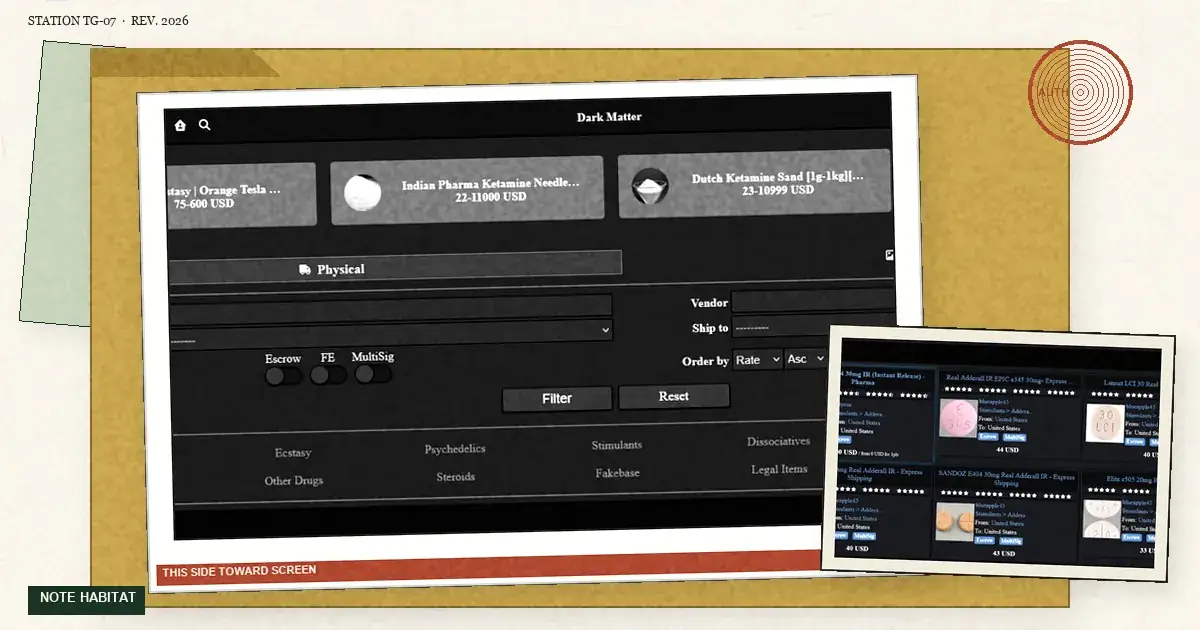
An onion name belongs to a naming and routing habitat that an ordinary browser does not use. This tor guide describes that boundary because misunderstanding it creates an opening for deceptive helpers. A familiar browser reporting that it cannot resolve an onion name is behaving normally; the message is not evidence that a market was seized, moved, or replaced.
The important distinction is between explanation and access coaching. It is enough to know that onion services are reached with Tor software obtained from the Tor Project, and that ordinary DNS does not answer those names. A research card does not need a connect button, a settings carousel, or a branded installer to make that distinction clear.
Predatory pages exploit the boundary by offering software that claims to unlock a hidden destination. The offer may resemble a browser update, VPN requirement, extension, proxy helper, or chat-assisted route. None of those claims is repaired by a polished logo. Software provenance belongs upstream with the project that signs and publishes it.
No connect widget. A clone that adds one is not Station TG-07.
I. How this tor field guide describes a habitat edge
Consider a mainstream browser that receives an onion name and returns a lookup error. That is the first animal: an expected mismatch between client and naming system. It says nothing reliable about the operator behind the name because the request never entered the appropriate habitat.
The second animal is a fake seizure splash. It may copy agency emblems, case numbers, countdowns, or dramatic warnings in order to provoke a hurried next click. A picture of authority is still page content. Genuine legal conclusions require reliable official sources and, where necessary, qualified counsel; this card supplies neither.
The third animal is a missing cream URL on this host. A 404 here means a local path was not found. It does not report onion reachability, a takedown, or a mirror event. Confusing a local editorial error with external service status gives static paper powers it does not have.
II. Onion itinerary that allows stopping at the pass
At the boundary, stopping is a complete response. If obtaining the signed client from its upstream source is uncertain, or if an address lacks prior signed support, no later step can compensate for that missing foundation. Urgency belongs to the page making the pitch, not to the reader.
Avoid market-branded browsers and VPN-only funnels presented as mandatory shortcuts. A VPN and Tor solve different problems, and an affiliate bundle that collapses them into one required product deserves scrutiny. Read current Tor Project documentation for client guidance rather than allowing a destination-themed page to define the tools.
The related border and habitat-question sheets explain terminology without turning the station into a launch panel. Links between informational cards remain ordinary internal references. They do not test an onion, reveal a hidden value after a click, or report a green status light.
III. Station notes on errors, splashes, and missing cream URLs
Section III asks readers to name the three animals before reacting: ordinary lookup error, theatrical seizure page, or missing local URL. Each has a different evidence trail. Treating them as interchangeable encourages exactly the panic that helper pages and fake status services monetize.
The tor guide can document those categories while admitting its limits. It cannot determine an onion service's present state from this clearnet page, cannot authenticate a law-enforcement image by appearance, and cannot transform its own 404 into news about another host.
A chat box that promises to diagnose the problem or reveal a working address adds another untrusted party at the moment a reader is most uncertain. Do not supply account details, install files, or accept destination claims merely because the helper correctly noticed an expected browser error.
IV. Note questions on this field card
Why does an ordinary browser reject an onion name?
Onion names do not use ordinary DNS and require the Tor network and suitable software. The rejection is expected client behavior, not proof of an outage, seizure, or replacement address.
How should a dramatic seizure page be treated?
As an unverified web exhibit until reliable official reporting supports it. Logos and case numbers can be copied. Do not install a helper or follow a replacement link offered by the splash.
What does a missing page on this host mean?
Only that the requested tor-guide.com path was absent or incorrect. It provides no measurement of a hidden service and should not be interpreted as a market-status signal.
Close of sheet
Good habitat notes reduce categories before they increase action. Identify the client, the naming system, and the kind of page in view; if uncertainty remains, leave it unresolved rather than accepting a stranger's shortcut.
The tor guide keeps this boundary descriptive. Ordinary errors, fake splashes, and missing cream URLs are separate observations, and none creates a reason to install a helper.