Sheet TG-07-G / CLIMATE
Climate Notes on the Tor Guide Desk
Weather is not geology. Dates are not lamps.
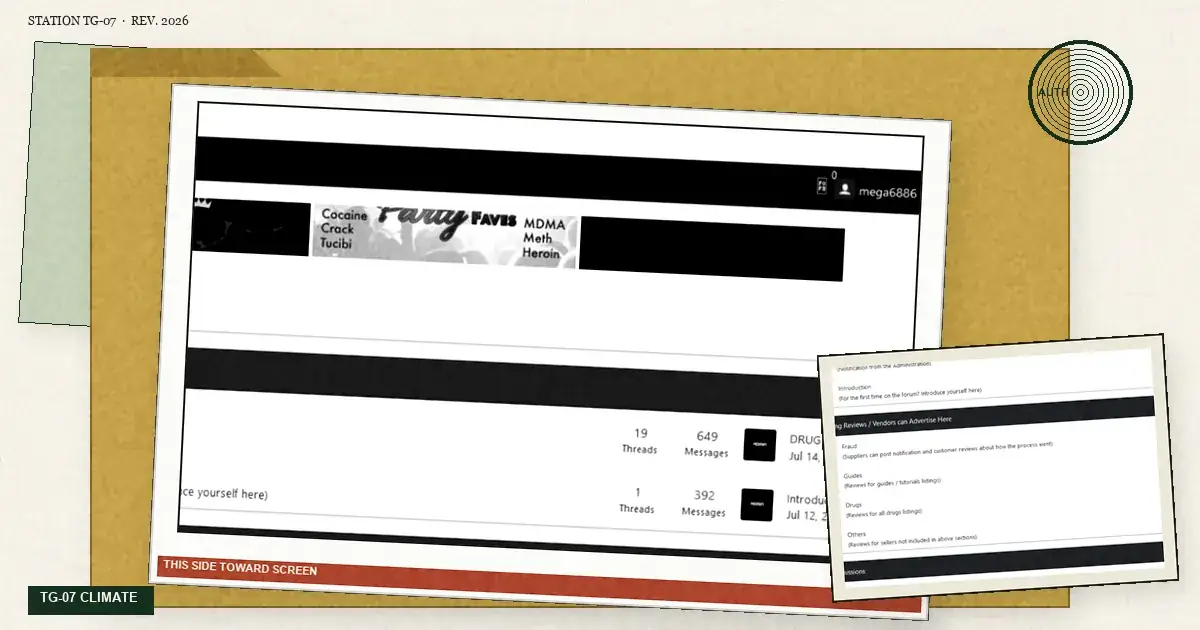
Climate on this tor guide describes the information environment surrounding a market name: advertising bursts, copied articles, seizure rumours, and sudden clusters of domains claiming to be official. None of those signals measures an onion service directly. They measure what publishers, affiliates, impersonators, and search systems are doing around a query at a particular time.
The date 8 September 2026 therefore carries more weight than a green status lamp. A static researcher can state when evidence was collected and explain its source, but cannot promise that an onion endpoint answers now. Pretending otherwise replaces observation with theatre.
Seasonal language is useful only when it keeps volatile claims visibly temporary. It should never turn gossip into a forecast or search prominence into a certificate.
I. How this tor field guide records canopy weather
Search results react to publication volume, links, user behaviour, indexing schedules, and paid placement. When a market name begins attracting attention, low-cost pages can multiply faster than careful reports because their publishers copy titles and identifiers without checking provenance. The resulting density may look like confirmation to a reader even though every page ultimately descends from one unsupported claim.
A dated field record interrupts that circularity by distinguishing observation time from event time. If a screenshot was supplied before publication, the capture date and the typesetting date may differ; neither proves present reachability. If an onion string rotates later, the old card becomes historical evidence of what circulated, not a silent instruction to keep using it.
Words such as seized, returned, hacked, and official demand particularly strong attribution. They can alter behaviour quickly and are profitable search terms, which makes them attractive to both affiliates and impersonators. This archive uses sighted, cited, reported, and unverified where those narrower verbs match the available evidence.
II. Onion itinerary through a rumour season
An onion itinerary through a noisy season should begin by identifying the claim, its earliest attributable source, and whether that source signed the statement. Ten articles repeating a sentence do not become ten independent witnesses when their wording and timestamps reveal common copying. A PGP signature from a previously established key is qualitatively different because it binds text to cryptographic identity.
Mirror lists often expand during outages or rumours. Some additions may be genuine, while others exploit demand by presenting generated v3 names under copied branding. A fifty-six-character format check removes malformed entries but cannot select the genuine ones. The archive therefore dates the identifiers it cites and refuses unsourced additions from advertisements or comment sections.
Repeated refreshing introduces another problem: it rewards pages engineered to capture anxious traffic and keeps readers exposed to changing prompts. A better research note records what was observed, where it came from, and what remains unknown, then sets a later review date. That method produces a traceable record rather than a trail of screenshots with no evidentiary hierarchy.
III. Station notes on tickers, lamps, and stillness
Station notes explain why there is no live-status widget. A credible availability monitor would need defined probe locations, intervals, failure thresholds, retention, clock discipline, and disclosure of what was actually requested. A coloured dot without that methodology conceals more than it reveals, especially because Tor paths and onion services can fail differently for different observers.
The tor guide climate file instead preserves a still season: public discussion and supplied captures assessed on 8 September 2026. That choice makes the page less exciting but more falsifiable. A later researcher can compare dates and documents rather than being asked to trust a widget whose historical readings have vanished.
Readers should also separate silence from evidence of harm. An unavailable site does not prove an exit, arrest, compromise, or loss, while an available site does not prove continuity of control. Each conclusion requires its own source. Search weather can suggest what deserves investigation; it cannot finish the investigation.
IV. Climate questions for a still desk
Does a ranking jump mean a plot is safer?
No. Ranking reflects search and publishing activity, which may include advertising and imitation. It neither authenticates an Ed25519 key nor supplies evidence about market operations, escrow, or user safety.
Why date the climate card at all?
The date defines the observation window and prevents later readers from mistaking old citations for current telemetry. It also makes changes between editions visible instead of silently overwriting history.
Will this page update every time a rumour moves?
No. Claims are reviewed as dated evidence, not streamed as gossip. An update should occur when there is enough attributable material to justify a new record and a new date.
Close of sheet
When discussion becomes loud, reduce the claim to its source, signature status, and date. Anything that remains after those checks may be worth filing; the rest is atmosphere.
The tor guide keeps this climate card still so its limits can be inspected. Return later with a document, not merely another cluster of pages repeating the same forecast. A dated correction will remain more useful than an anxious refresh.